

by Morgan State U
July 31, 2025
Morgan State University Appoints Dr. Walter Royal III as Inaugural Endowed Professor in Brain Science
University Launches Center for Brain Health Research, Advancing Neuroscience and Health Equity
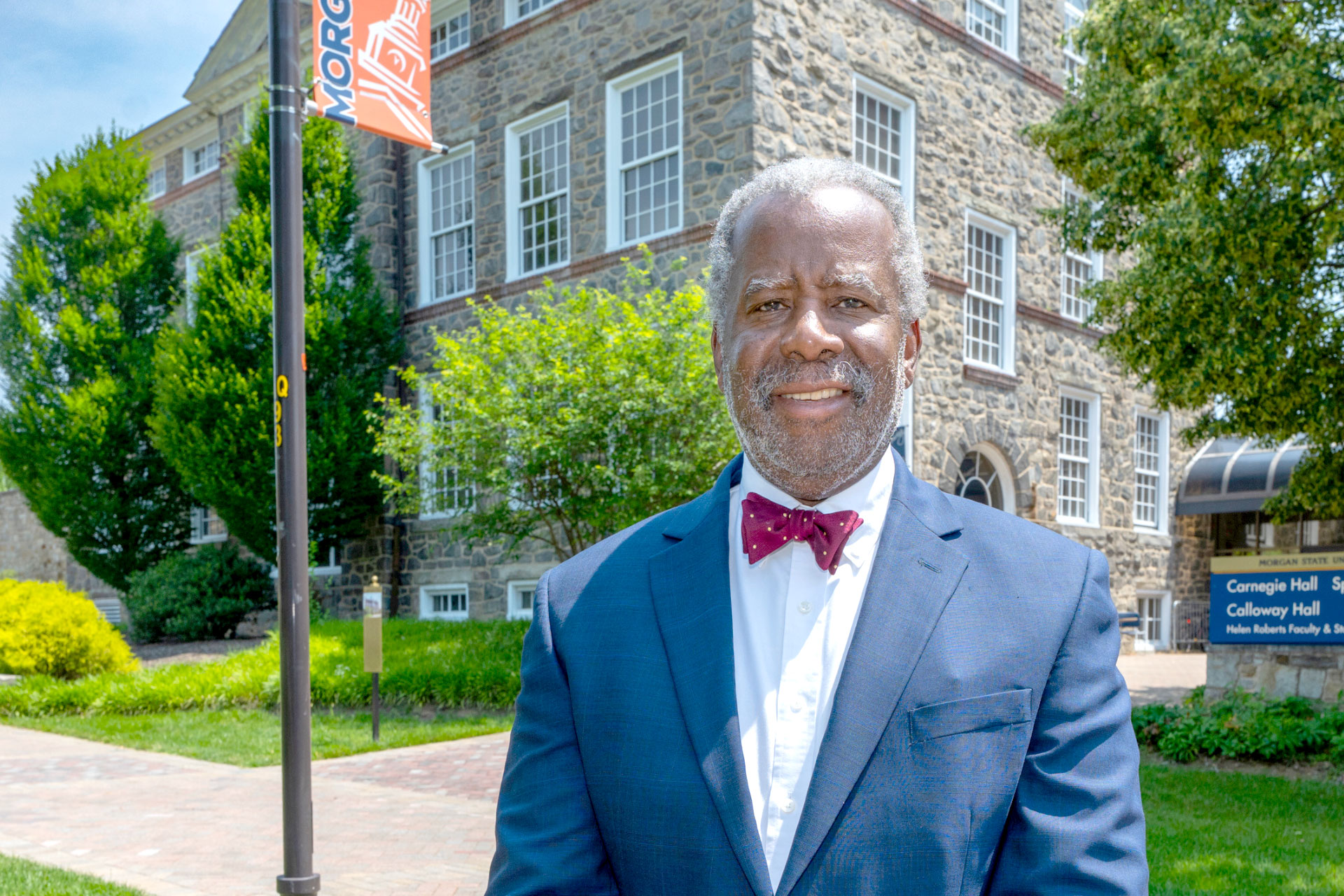
BALTIMORE— In a defining moment for Morgan State University’s ascension in neuroscience and health equity, the University has appointed Walter Royal III, M.D., as the inaugural endowed professor in Brain Science and director of the newly established Center for Brain Health Research. Dr. Royal will oversee a multidisciplinary research team of faculty and postdoctoral researchers across disciplines—including biology, engineering, mathematics and psychology—supported by Morgan’s newly launched Master of Science in Applied Neuroscience Program.
“Dr. Royal brings to Morgan and the School of Computer, Mathematical and Natural Sciences (SCMNS) a profound depth of scientific expertise and leadership that will significantly advance our brain science research initiatives while strengthening the broader academic environment," said Paul Tchounwou, Sc.D., SCMNS Dean and AAAS Fellow. “His appointment reflects our strategic commitment to attracting distinguished, world-class faculty who are dedicated to excellence and transformative contributions.”
 A native of Baltimore, Dr. Walter Royal III is an accomplished academic neurologist with more than thirty years of leadership, clinical, and research experience in neurovirology, neuroimmunology, and multiple sclerosis. He joins Morgan from Morehouse School of Medicine, where during his tenure, he served as chair of the Department of Neurobiology and director of the Neuroscience Institute. Dr. Royal has also led major research initiatives at the Veterans Administration (VA), where he served as the Associate Executive Director of the Center for Visual and Neurorehabilitation Research. His career spans notable appointments at premier institutions, including Johns Hopkins University, the University of Maryland, and the VA Health System, as well as experience training and working in the intramural programs at the NIH (the National Institute of Drug Abuse and the National Institute of Neurological Disorders and Stroke) and the Food and Drug Administration.
He earned his A.B. in Biochemistry from Harvard University and his M.D. from Dartmouth Medical School, followed by extensive postgraduate training in medicine at the Brigham and Women's Faulkner Hospital in Boston, and neurology and neurovirology at Johns Hopkins. His academic appointments reflect a sustained trajectory of excellence, having served as director of major multiple sclerosis programs and neurology departments. A prolific mentor, Dr. Royal has supervised medical students, residents, fellows, and junior faculty across disciplines, many of whom have gone on to prominent academic and clinical careers.
Beyond his endowed professorship in Brain Science, Dr. Royal’s purview includes oversight of Morgan’s Center for Brain Health Research. The Center, which focuses on fundamental and translational research concerning brain disorders of particular significance and concern to individuals of recent African ancestry and other underrepresented populations, will serve a vital role closing critical gaps in representation, data equity and health outcomes. The interdisciplinary Center will conduct cutting-edge investigations into neurological disorders, develop AI-based precision medicine tools, work collaboratively with other leading research entities in the neural science arena, and train students and researchers in approaches to address brain health disparities.
 “It is an honor to return to my hometown of Baltimore as the inaugural endowed professor in Brain Science at Morgan, amid its impressive research expansion and ascendency to R1 reclassification,” said Dr. Royal. “Advances in neuroscience have deepened our understanding of brain disorders, especially their impact on historically marginalized communities. At the Brain Health Center, we are committed to applying that knowledge and, through collaborative research and innovation, developing strategies to improve brain health across our region and beyond.”
Substantial health disparities exist in diagnosis and treatment outcomes of neurological and psychiatric disorders within the African diaspora. In the treatment of brain afflictions, the rapidly evolving field of precision medicine (also called personalized medicine or targeted medicine), critically depends on data analytics, most of which is based on European ancestry datasets. Comparatively, significant deficiencies exist with genomic, genetic, physiological, and neurochemical/pharmacological markers among those of recent African ancestry and other minoritized populations. The Center for Brain Health Research aims to close the gap through its research and application of “state-of-the-art” AI and Big Data analytics to mine the much-needed data for the research and medical community.
Aligned with the School of Computer, Mathematical and Natural Sciences, the Center for Brain Health Research will focus on fundamental and translational research concerning brain disorders of particular significance and concern to individuals of recent African ancestry and other underrepresented populations. The interdisciplinary Center will conduct cutting-edge investigations into neurological disorders, develop AI-based precision medicine tools, work collaboratively with other leading research entities in the neural science arena, and train students and researchers in approaches to address brain health disparities.
In addition to working in league with institutions like the Lieber Institute for Brain Development (LIBD) and other local and regional academic, government, and industry partners, the Center shares interests with and will closely collaborate with other centers at Morgan such as the Center for Urban Health Disparities Research and Innovation (RCMI), Center for Equitable AI and Machine Learning Systems, Center for Urban Health Equity (CUHE), and the Center for Predictive Analytics.
About Morgan
Morgan State University, founded in 1867, is a Carnegie-classified high research (R2) institution offering more than 150 baccalaureate, master’s degree, doctorate and certificate programs. As Maryland’s Preeminent Public Urban Research University, and the only university to have its entire campus designated as a National Treasure by the National Trust for Historic Preservation, Morgan serves a multiethnic and multiracial student body and seeks to ensure that the doors of higher education are opened as wide as possible to as many as possible. For more information about Morgan State University, visit www.morgan.edu.
# # #
Media Contacts:
Larry Jones, Dell Jackson or Cheryl Stewart for Morgan State University PR
443-885-3022
Contact Information
Office of Public Relations & Strategic Communications
1700 East Cold Spring Lane
McMechen Hall Rm. 635
Baltimore, Maryland 21251
Contact Information
Office of Public Relations & Strategic Communications
1700 East Cold Spring Lane
McMechen Hall Rm. 635
Baltimore, Maryland 21251