

by Morgan State U
July 29, 2025
Morgan State’s PEARL Secures State and Federal Funding to Study Impact of Invasive Blue Catfish
NOAA and MD Department of Natural Resources Grants to Support Research Aimed at Mitigating Impact of Invasive Species on Local Ecosystems, Fisheries, and Coastal Economies
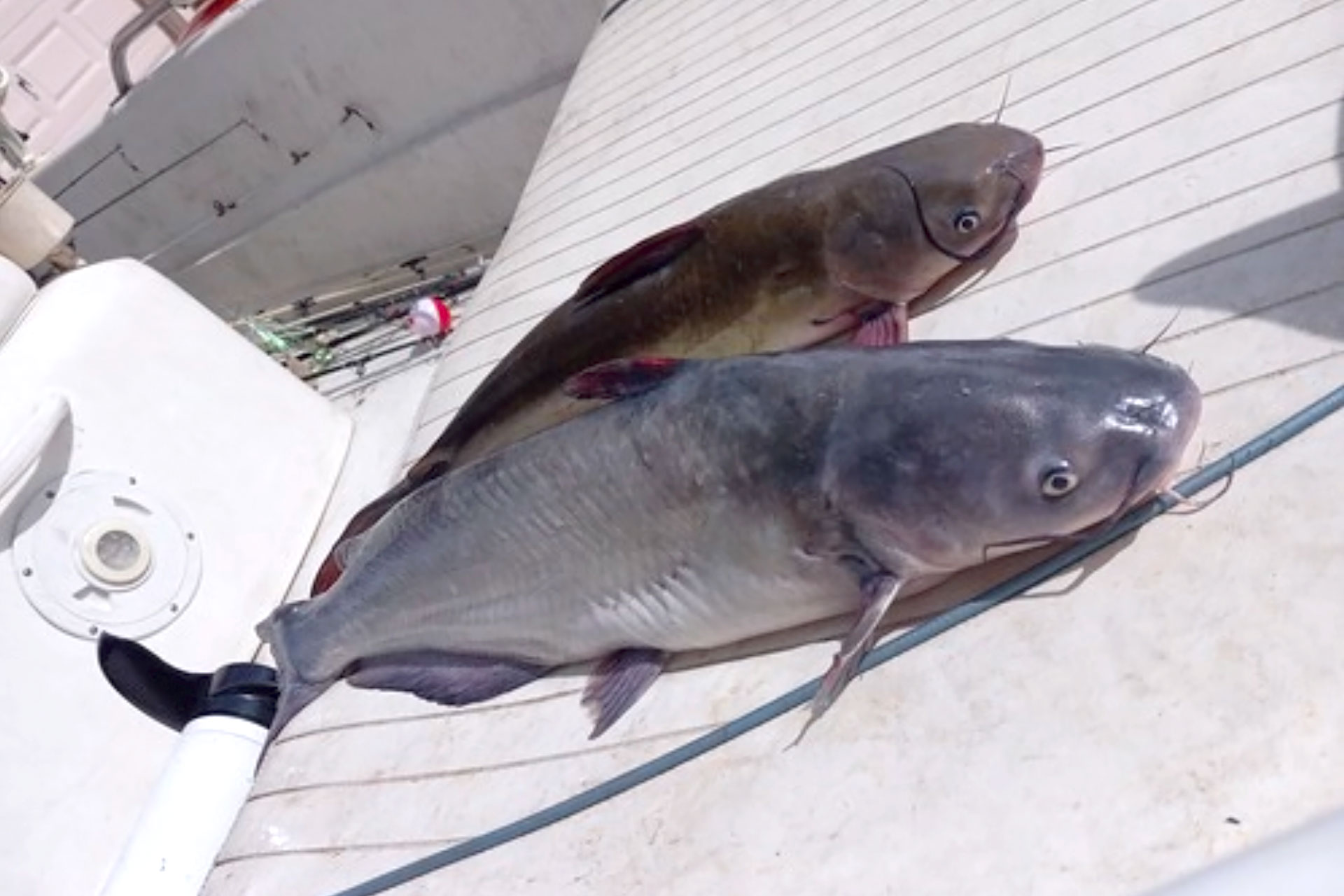
 BALTIMORE — The Morgan State University (MSU) Patuxent Environment and Aquatic Research Laboratory (PEARL) was awarded two grants: $500,000 from the National Oceanic and Atmospheric Administration (NOAA) and $75,000 from the Maryland Department of Natural Resources’ (DNR) Fishing and Boating Services to study the impact of blue catfish, an invasive species found throughout the Chesapeake Bay system. Over the next two years, research conducted by PEARL will involve engagement with a wide range of stakeholders, including commercial and recreational sectors, government entities, nongovernmental organizations, and scientific community members.
The recent invasion of blue catfish in the Chesapeake Bay system presents challenges for sustainable fisheries management across various jurisdictions. Many species that are important for commercial and recreational fishing are affected by this invasive fish. Additionally, a diverse range of stakeholders—often with conflicting interests—are directly affected by the presence of blue catfish. This funding will be allocated to support research, data collection, and foster collaborative dialogue among multiple entities. The goal is to gather relevant data, create a shared framework of management strategies, and provide recommendations that promote a unified understanding of best practices for managing blue catfish.
 "By utilizing ecosystem modeling and collaborating closely with fishermen and saltwater and freshwater management agencies across the Chesapeake Bay system, we aim to demonstrate the combined effects of various management strategies for addressing the invasive population. Our goal is to work together as a group to identify the combination of ideas that will best serve the interests of most stakeholders. This approach is commonly referred to as 'structured decision making,'” said Tom Ihde, Ph.D., research assistant professor at PEARL. “Our method is highly collaborative, placing the stakeholders, along with their knowledge and ideas, at the center of the process. Ultimately, we will provide each jurisdiction with recommendations for a range of management measures that are most likely to control the invasive species while also creating new income opportunities for watermen.”
To facilitate this process, four in-person meetings will be organized, providing a forum for Chesapeake stakeholders to share their ideas with fisheries managers. All suggestions will be documented for the managers' consideration. Fisheries scientists will analyze available scientific data to visualize the impacts of these proposals through an iterative strategic decision-making process that will take place over 18 months, guided by a professional meeting facilitator.
During the forums, participants will collaboratively assess the trade-offs associated with the proposed management ideas. Additionally, the economic value of Maryland's recreational blue catfish harvest fishery has yet to be estimated. With funding from the Maryland DNR, a team from PEARL will design and conduct a survey to estimate the total spending of recreational anglers related to this fishery. This survey will collect both quantitative and qualitative data, focusing on licensed anglers. Upon completion, a comprehensive report will be created, shared, and presented at regional and national conferences.
 "The invasive Blue Catfish is a large and voracious predator that is negatively affecting Chesapeake Bay ecosystems,” said Scott Knoche, Ph.D., director of PEARL. “The Morgan PEARL is leveraging our diverse expertise - including social science survey research, ecological modeling, and stakeholder engagement - to deliver actionable research that will support our federal and state partners in developing new management strategies that will benefit coastal ecosystems and economies."
The PEARL is strategically positioned 80 miles south of Morgan State University’s main campus, nestled along the picturesque shoreline of the Patuxent River, a major tributary flowing into the Chesapeake Bay. This unique location provides an ideal setting for research focused on coastal and environmental systems. The primary objective of the research conducted at PEARL is to deepen our knowledge of these complex ecosystems and the coastal economies that depend on them. By investigating complex social-environmental systems, the studies aim to develop effective strategies for the management and preservation of our valuable natural resources, ensuring their sustainability for future generations.
About Morgan
Morgan State University, founded in 1867, is a Carnegie-classified high research (R2) institution offering more than 150 baccalaureate, master’s degree, doctorate and certificate programs. As Maryland’s Preeminent Public Urban Research University and the only university to have its entire campus designated as a National Treasure by the National Trust for Historic Preservation, Morgan serves a multiethnic and multiracial student body and seeks to ensure that the doors of higher education are opened as wide as possible to as many as possible. For more information about Morgan State University, visit www.morgan.edu.
# # #
Media Contacts:
Cheryl Stewart or Dell Jackson, for Morgan State University PR
443-885-3022
Contact Information
Office of Public Relations & Strategic Communications
1700 East Cold Spring Lane
McMechen Hall Rm. 635
Baltimore, Maryland 21251
Contact Information
Office of Public Relations & Strategic Communications
1700 East Cold Spring Lane
McMechen Hall Rm. 635
Baltimore, Maryland 21251