

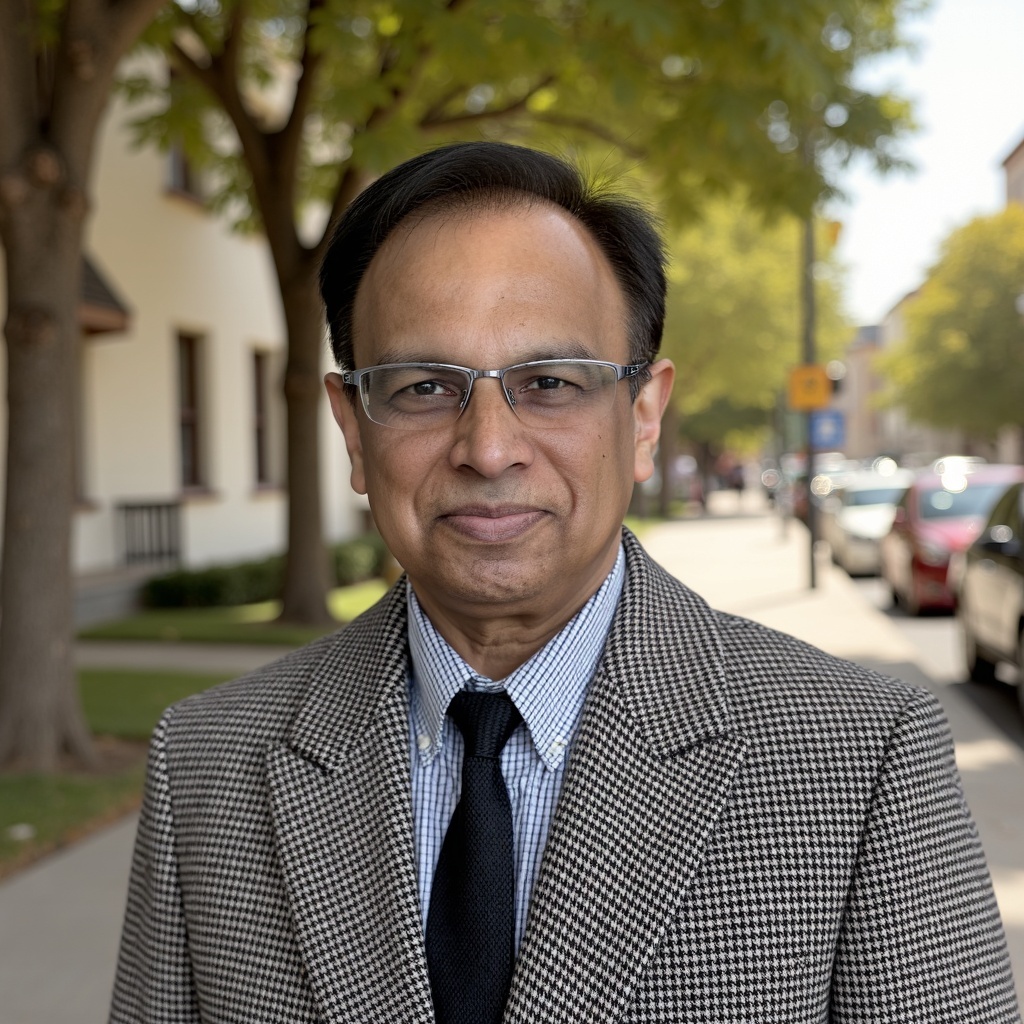
Fakhrul Ahsan, Ph.D.
Office: Dixon Research Center Rm 200
Phone: 443-885-4516
Fakhrul.Ahsan@morgan.edu
Dr. Fakhrul Ahsan serves as Associate Dean for Research and Graduate Programs in the School of Computer, Mathematical, and Natural Sciences at Morgan State University and is a Professor in the Department of Biology. In this role, he provides leadership for research development and graduate education, with a focus on strengthening research infrastructure, supporting faculty scholarship, expanding interdisciplinary graduate programs, and advancing externally funded research initiatives.
Dr. Ahsan brings nearly 25 years of experience spanning academic research, graduate education, and institutional leadership. He previously held faculty and senior administrative appointments at Texas Tech University Health Sciences Center, where he progressed from Assistant Professor to Tenured Full Professor and was named University Distinguished Professor, and at California Northstate University College of Pharmacy, where he served as University Distinguished Professor and Chief Scientific Officer. He received his foundational training in pharmacy at the University of Dhaka, Bangladesh, earned a Ph.D. in Pharmaceutics from Complutense University of Madrid, and completed postdoctoral training at the University of Alabama at Birmingham. Across these roles, he served as Graduate Program Director and Founding PhD Program Director, leading graduate curriculum development, accreditation, self-study processes, and the establishment of research compliance and sponsored programs infrastructure, while supporting faculty mentoring, promotion, and graduate student training.
His scholarly work is rooted in pharmaceutical and biomedical sciences, with a focus on translational research in drug delivery, nanomedicine, and microfluidic disease modeling. His research has addressed cardiopulmonary diseases, particularly pulmonary arterial hypertension, through the development of organ-on-a-chip platforms, nanoparticle-based therapeutics, inhalation strategies, and emerging technologies such as 3D printing for pharmaceutical applications. He has published extensively in peer-reviewed journals, holds U.S. patents arising from his research, and has led interdisciplinary, collaborative studies across academia, industry, and government. A complete list of publications is available here https://www.ncbi.nlm.nih.gov/myncbi/fakhrul.ahsan.1/bibliography/public/online.
Dr. Ahsan has secured nearly $10 million in extramural research funding as principal investigator, including support from the National Institutes of Health, American Heart Association, and Cardiovascular Medicine and Research Education Foundation. He has served on national grant review panels, study sections, and advisory committees and is currently an Associate Editor of the Journal of Drug Targeting. Based on standardized citation indicators, his scholarly impact places him among the top ~2% of scientists worldwide in his field.
In addition to his academic research, Dr. Ahsan has pursued translational and entrepreneurial efforts to advance the translation application of scientific discovery, including founding a research-driven startup focused on microfluidic disease-modeling technologies, supported by NIH SBIR funding. Teaching and mentorship remain central to his academic philosophy. He has developed and taught courses across PharmD and Ph.D. curricula in pharmaceutics, drug development, biopharmaceutics, and regulatory sciences, and has mentored more than 50 faculty members, postdoctoral fellows, and graduate trainees who have gone on to careers in academia, industry, and regulatory agencies. In recognition of his commitment to mentoring, he has received institutional awards for excellence in research mentorship and faculty development.
Through his leadership, scholarship, and service, Dr. Ahsan is committed to advancing research excellence and graduate education, strengthening institutions, supporting faculty and student success, and expanding the societal impact of academic research.
Contact Information
School of Computer, Mathematical, and Natural Sciences
Dr. Paul Tchounwou, Dean
Dixon Science Research Center Rm 200
1700 E. Cold Spring Lane
Baltimore, MD 21251
P: 443-885-4515
E: scmns-deans-office@morgan.edu
Contact Information
School of Computer, Mathematical, and Natural Sciences
Dr. Paul Tchounwou, Dean
Dixon Science Research Center Rm 200
1700 E. Cold Spring Lane
Baltimore, MD 21251
P: 443-885-4515
E: scmns-deans-office@morgan.edu