

by Morgan State U
March 26, 2026
Morgan State Joins National Initiative Advancing Environmental Justice and Campus Sustainability
A cohort of Morgan State University scholars representing a wider range of academic disciplines and fields of study is helping to lead a new national initiative focused on advancing environmental justice, improving resilient design, and preparing the next generation of clean energy leaders. Morgan is one of only five Historically Black Colleges and Universities (HBCUs) selected to participate in the Building Improvement Toolkits (BIT) for Resilient HBCUs initiative in partnership with the Southface Institute and Sustain Our Future Foundation (SOFF).
The BIT for Resilient HBCUs initiative is an ambitious three-year pilot designed to help HBCU campuses strengthen climate resilience while equipping students with hands-on experience in sustainability practices. Led by the Atlanta-based nonprofit Southface Institute, the program combines training, technical assistance, and funding to support improvements in energy efficiency, water management, and waste reduction across participating campuses through a multidisciplinary student collaborative working in practicum.
Morgan joins Clark Atlanta University, Spelman College, Texas Southern University, and Xavier University of Louisiana as demonstration sites for climate leadership and innovation.
Initiatives grounded in this model reflect the future of business and the evolving workplace. Professionals from diverse disciplines and industries bring together their resources, expertise, and perspectives to advance a shared mission—an approach that defines a collaborative and results-driven work environment. Morgan is actively preparing its students to thrive in this dynamic, team-oriented setting.
 “Seeing students from engineering, mathematics, planning, political science, psychology, and design fields work side by side is exciting because it mirrors the complexity of the real urban systems they are trying to change,” said Samia Kirchner, Ph.D., associate professor of architecture at Morgan. “When students bring different methods—whether that is hydrologic modeling, spatial analysis, policy, urban design, or community-based interviewing—into one project, they begin to see that no single discipline can deliver resilient HBCU campuses or equitable neighborhoods on its own.”
Dr. Kirchner serves alongside James Hunter, Ph.D., interim chair and associate professor of civil engineering and Linda Loubert, Ph.D., associate professor of economics, as campus liaisons for the BIT initiative at Morgan.
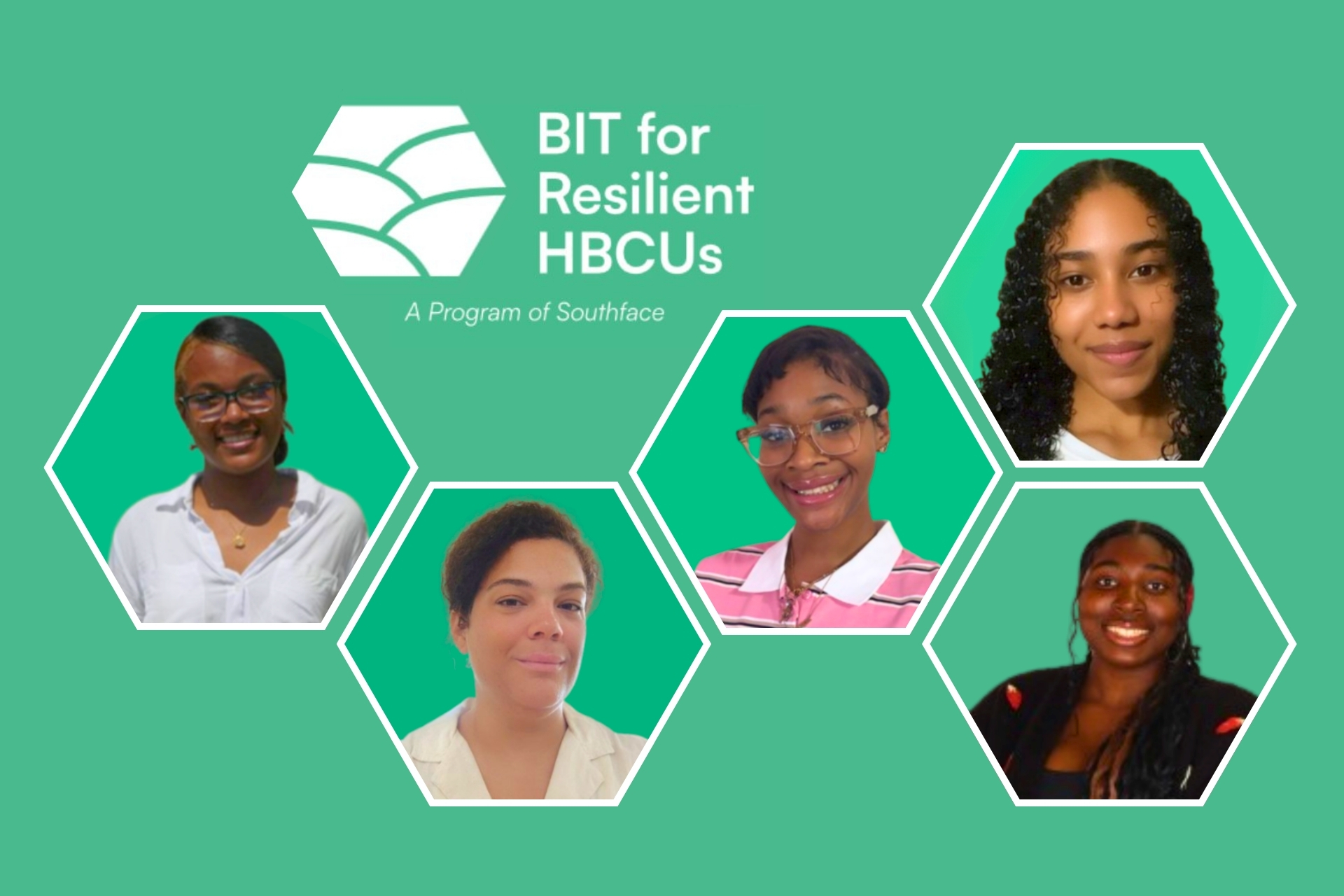
Five Morgan students were selected as the University’s first BIT Fellows from a pool of more than 100 applicants across participating institutions. Representing diverse academic disciplines, the fellows will collaborate to identify sustainable operations and maintenance opportunities across campus while applying the BIT platform to track performance and implement sustainability strategies.

Morgan’s inaugural fellows are:
- Gabrielle Oshadiva, sophomore mathematics major
- Zavda Fludd, junior political science major
- Ashley Curry, graduate student pursuing a master’s in city and regional planning
- Lidya Williams, junior civil engineering major
- Maya J. Henry, junior psychology major
Representatives from SOFF—Program Director Naadiya Hutchinson and Regenerative Communities Program Manager Tanvi Gadhia—highlighted the environmental justice context surrounding many HBCU communities. They noted that historic design inequities have left surrounding neighborhoods disproportionately impacted by environmental conditions, creating a critical need—and opportunity—for intervention.
Through its Regenerative Communities initiative, SOFF works across Maryland to support projects such as electric HVAC system upgrades and home insulation improvements. This work has also expanded opportunities for collaboration with Morgan, including the creation of student internships.
Other partners supporting this effort include the Environmental Defense Fund, the program’s exclusive indoor air quality best practices sponsor, and global engineering firm WSP, whose climate action expertise provides technical guidance and hands-on learning opportunities for participating students.
Elaborating on the initiative's impact, Dr. Kirchner added, “By training students as BIT practitioners, these programs build local technical capacity in and for communities that have historically been overburdened by pollution yet under-resourced in planning and engineering expertise.”


“In our urban design studios on stormwater, urban farms, and environmental justice in Baltimore, we have seen how pairing data on flooding, water quality, or building performance with community knowledge and lived expertise leads to infrastructure decisions that actually reflect residents’ priorities.”
As a component of the initiative, Morgan received $150,000 in grant funding to support campus sustainability projects. Over the next two years, fellows will complete training, earn professional credentials, and help implement real-world climate action projects—new and existing—designed to improve building performance, strengthen community resilience, and advance environmental justice.
“Through efforts like BIT, BLUE-CORE, and our urban farms and data collaboratives, students will audit buildings, map heat and flooding, co-design green infrastructure with residents, and use that evidence to push for policies and investments that align with community priorities—from lower utility bills to cleaner air and safer streets,”
Congratulations to Morgan’s inaugural BIT Fellows, who embody the University’s enduring legacy of leadership and service—advancing sustainability, championing environmental justice, and carrying forward the institution’s commitment to community impact.
Contact Information
Office of Public Relations & Strategic Communications
1700 East Cold Spring Lane
McMechen Hall Rm. 635
Baltimore, Maryland 21251
Contact Information
Office of Public Relations & Strategic Communications
1700 East Cold Spring Lane
McMechen Hall Rm. 635
Baltimore, Maryland 21251